
Mahatma Gandhi Jayanti

Mahatma Gandhi Jayanti
Mahatma Gandhi's birthday (Gandhi Jayanti or Mahatma Gandhi Jayanti) is a gazetted holiday in India on October 2 each year. It marks the anniversary of Mahatma Gandhi's birth on October 2, 1869. Gandhi is remembered for his contributions towards the Indian freedom struggle.
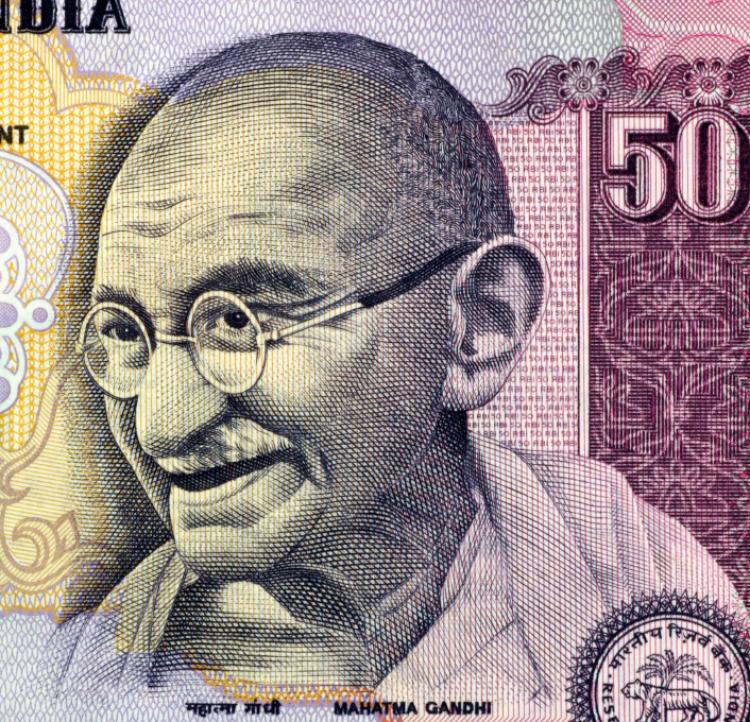
Gandhi on 50 rupees banknote from India
Mahatma Gandhi's birthday (image of Gandhi pictured above) is an important holiday in India
©iStockphoto.com/Georgios Kollidas

What do People do?

Many people celebrate Mahatma Gandhi's birthday across India. Events include:
  • Prayer services, commemorative ceremonies and tributes at locations all over India.
  • Art exhibitions and essay competitions.
  • The presentation of awards to projects stimulating a non-violent way of life.
  • The showing of films and book readings on Mahatma Gandhi's life and achievements.
Many people sing Raghupati Raghava Raja Ram, Gandhi's favorite devotional song. Bunches of flowers or flower garlands are placed on many statues of Mahatma Gandhi throughout India. Some people also avoid eating meat or drinking alcohol on October 2.
                                              Image result for about mahatma gandhi jayanti

Public Life

Government offices, post offices and banks are closed on Mahatma Gandhi's birthday. Stores and other businesses and organizations may be closed or have reduced opening hours. Those wishing to use public transport on the day may need to contact the local transport authorities to check on timetables.
                                           Image result for about mahatma gandhi jayanti

Background

Mahatma Gandhi, also known as Mohandas Karamchand Gandhi, was born on October 2, 1869, and died on January 30, 1948. He was a political and spiritual leader in India and played a key role in the Indian independence movement. Gandhi developed the novel technique of non-violent agitation, which he called "Satyagraha", loosely translated as "moral domination".
He is known for his non-violent civil disobedience in India and South Africa. These included the start of the non-cooperation movement in 1922 and the Salt Satyagraha or Salt (Dandi) March starting on March 12, 1930. Through Gandhi's efforts, India finally gained its freedom on August 15, 1947. The nation mourned for him after he was assassinated on January 30, 1948. The United Nations' (UN) International Day of Non-Violence is also held on October 2 each year to coincide with Mahatma Gandhi's birthday.
                                         Image result for about mahatma gandhi jayanti

Symbols

Three locations in India play important roles in the celebrations of Mahatma Gandhi's birthday. These are:
  • The Martyr's Column at the Gandhi Smriti in New Dehli where Mahatma Gandhi was shot on January 30, 1948.
  • The Raj Ghat on the banks of the river Yamuna in New Dehli where Mahatma Gandhi's body was cremated on January 31, 1948.
  • The Triveni Sangam where the rivers Ganga, Yamuna and Saraswati come together near Allahabad.
The British controlled the production and distribution of cloth in India in the late 1800s and early 1900s. Mahatma Gandhi felt that India could never become independent until the country could produce its own cloth. He encouraged people to spin and weave cotton cloth using small-scale traditional spinning wheels and looms. Hence, simple hand spinning wheels for cotton became an important symbol of the struggle for Indian independence and Mahatma Gandhi's life and work.

Comments

Popular posts from this blog

Krishna Janmashtami

Krishna Janmashtami Janmashtami is a popular festival of the Hindus that revolves around the celebration of the birth anniversary of Lord Krishna. This festival usually falls in the month of August or September.  In 2018, it is going to be celebrated on Sunday , 2 September. About Lord Krishna and Janmashtami History Krishna is considered to be one of the most powerful incarnations of Lord Vishnu, who was born into this world to help people get rid of evil demons. Janmashtami’s history dates back to several thousands of years when Lord Krishna was born to Devaki and Vasudevaa, who were imprisoned by his maternal uncle Kansa, the king of Mathura. Lord Krishna's Childhood Days There are various stories of Lord Krishna, which speak about his feats during his childhood. According to one such story, Krishna had killed lady demon, Putna and various other demons like Trunavarta, Aristhasur, and Keshi. He’s also famous for killing Kaliya Nag in order to remove poison fr...

Parsi New Year

Pateti - Parsi New Year Navroz or Pateti is the Parsi New Year and it is celebrated on the eve of New Year of the Zoroastrian calendar. On pateti day the parsis visit the fire temple or agiary. The agiary is called as a fire temple because the sacred fire which was brought from Iran once upon a time is always kept burning in the temple by the high priest. The parsis worship Ahura Mazda, symbolised by fire. The parsis on this day, promise to live with good thoughts, use good words and perform the right actions.                                          The word pateti is derived from Pazend patet, meaning 'repentance'. The Zoroastrian tenets are based on the three ideals of good thoughts, good words and good deeds. Anything that is out of accord with this is considered a sin.It is natural for anyone to have committed a sin in the course of a year, even if only inadvertently. Pa...

Bhaiya Dooj

Bhai Dooj: Brother-Sister Ritual Nowhere is the bond of brotherly-sisterly love glorified with such grandeur as in India. Hindus celebrate this special relationship twice every year, with the festivals of Raksha Bandhan and Bhai Dooj. What, When and How After the high voltage celebrations of Diwali, the  festival of lights  and firecrackers, sisters all over India get ready for 'Bhai Dooj' - when sisters ceremonize their love by putting an auspicious  tilak  or a vermilion mark on the forehead of their brothers and perform an  aarti  of him by showing him the light of the holy flame as a mark of love and protection from evil forces. Sisters are lavished with gifts, goodies, and blessings from their brothers. Bhai Dooj comes every year on the fifth and last day of  Diwali , which falls on a new moon night. The name 'Dooj' means the second day after the new moon, the day of the festival, and 'Bhai' means brother. Myths and Legen...